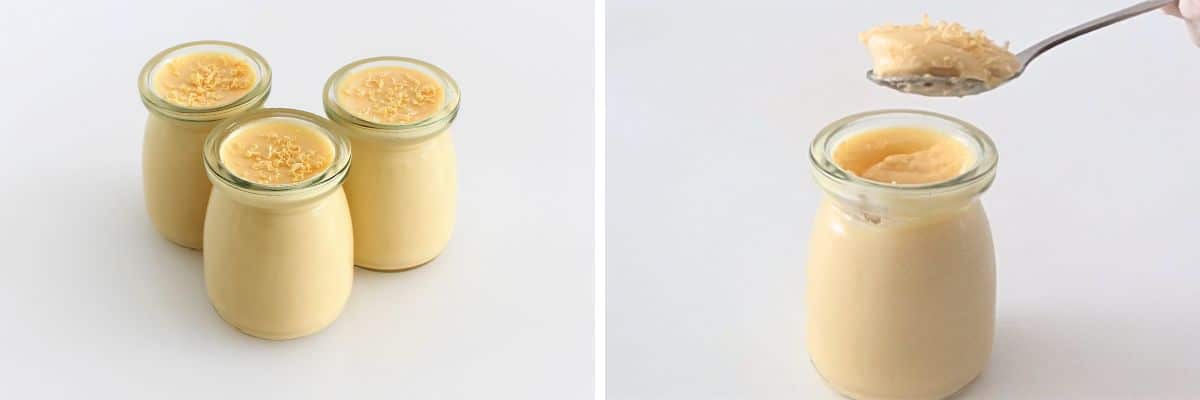
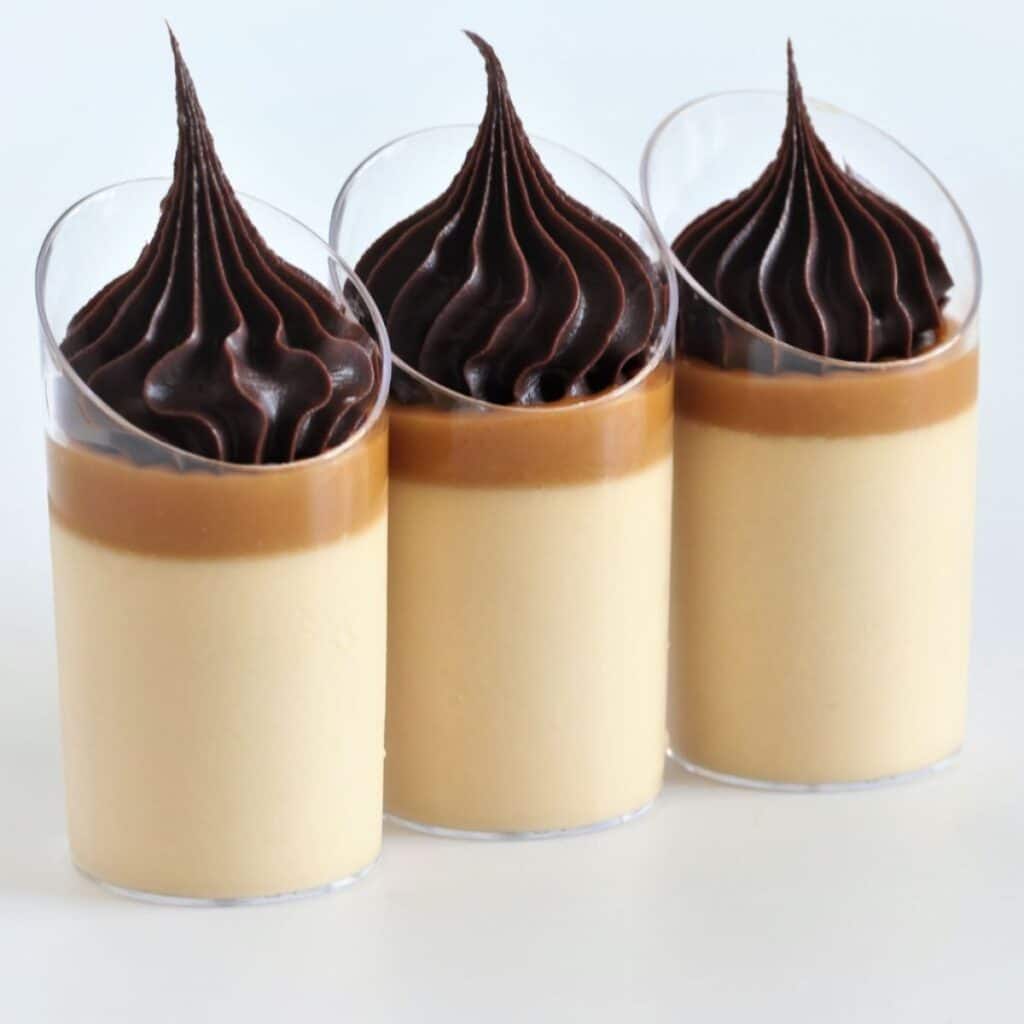
This Caramel Chocolate Panna Cotta is a real treat, mixing the deep taste of caramel chocolate with the smooth feel of classic panna cotta. Served up in cute individual jars or glass cups, each serving is topped with a bit of grated caramel chocolate, adding a nice little crunch and an extra kick of flavor.

SUMMARISE AND SAVE THIS RECIPE
It's a dessert that looks as good as it tastes, making it a great pick for special occasions or when you want to impress with something a bit fancy. The time spent in getting it just right and letting it chill overnight pays off with a dessert that's firm enough to hold its shape but still melts in your mouth, blending sweet caramel with a hint of vanilla.
This panna cotta is all about getting those little details right, and it shows in the final product. It's the kind of dessert that stands out, not just for how good it tastes but also for how it looks. Whether you're hosting a dinner party or just want to make something special, this Caramel Chocolate Panna Cotta is a winner both for its flavour and its style.
Why You'll Love Caramel Chocolate Panna Cotta
- Unique Flavour Combination: The blend of caramel and chocolate offers a rich and indulgent taste that's hard to resist. The caramel brings a sweet, buttery depth, while the chocolate adds a luxurious richness, making this dessert a hit for anyone who loves these flavours.
- Velvety Texture: Panna cotta is renowned for its silky, smooth texture. This recipe promises a dessert that's creamy and melts in the mouth.
- Elegance and Presentation: Served in individual jars or glasses, this panna cotta looks elegant and a little bit posh!
- Simplicity of the Recipe: The recipe is straightforward and easy to follow. It doesn't require complex techniques or equipment, making it accessible for home cooks of various skill levels.
- Make-Ahead Convenience: The fact that it needs to be chilled overnight makes it an excellent make-ahead option. This is convenient for hosts, as it frees up time on the day of serving and reduces last-minute stress.
- Customization Potential: This recipe allows for customization. You can adjust the amount of sugar, type of chocolate, or even add different toppings to suit their taste preferences.
Ingredients In Caramel Chocolate Panna Cotta
Hot Water: Used to dissolve the gelatine. Hot water ensures that the gelatine melts completely, resulting in a smooth texture in the panna cotta.
Gelatine: This is a key ingredient in panna cotta. Gelatine helps the mixture set into a firm yet tender texture. It's what gives panna cotta its signature jiggly yet stable form.
Caramel Chocolate (e.g., Caramilk): The star flavour of this dessert. Caramel chocolate provides a rich, creamy taste with a blend of sweet caramel and chocolate flavours. It's melted into the cream to infuse the panna cotta with its distinctive taste.
Cream: Acts as the base of the panna cotta. Cream contributes to the creamy and luxurious texture of the dessert. You can use any type of cream, with heavier creams resulting in a richer panna cotta.
Sugar: Adds sweetness to the dessert. It balances the flavours and complements both the caramel and chocolate.
Vanilla Extract: Vanilla adds depth and aroma to the dessert, enhancing the overall flavour profile without overpowering the caramel and chocolate.
Cold Milk: Milk is used to adjust the consistency of the panna cotta, making it lighter than if only cream were used. Adding it cold helps the mixture cool down faster before setting.
Reserved Square of Caramel Chocolate (for topping): Used as a garnish, this grated chocolate adds a decorative touch and an extra burst of caramel-chocolate flavour right before serving.
How To Make Caramel Chocolate Panna Cotta
Prepare the Gelatine:
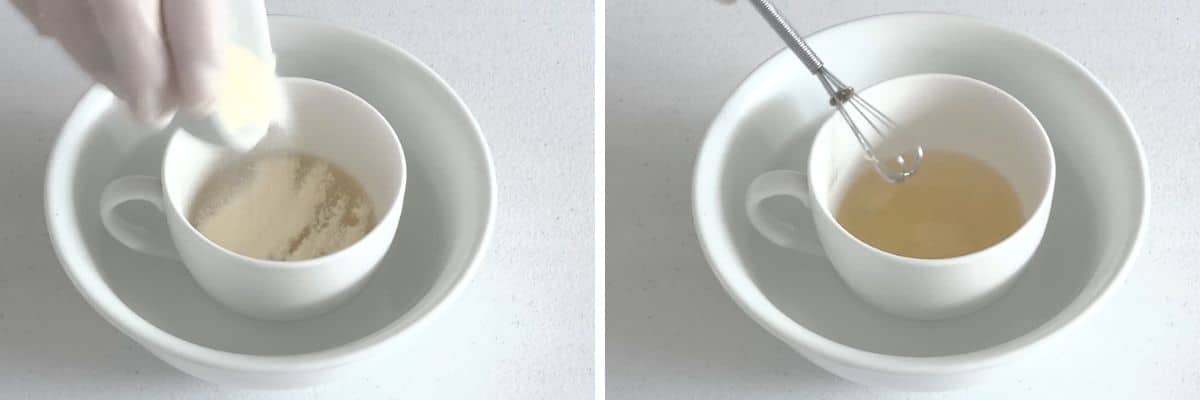
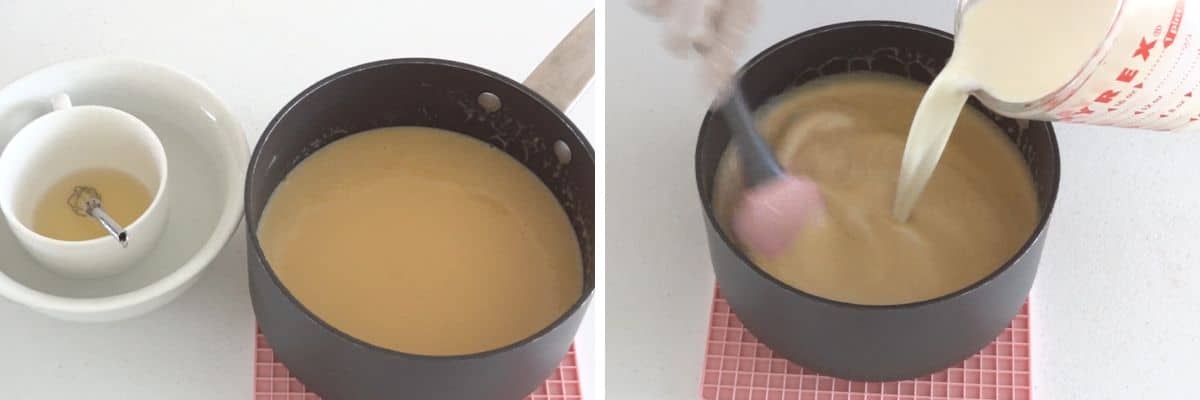
- Begin by dissolving the gelatine in hot water. Stir until it's completely dissolved. Keep this gelatine mixture in a warm water bath to ensure it stays liquid until needed. This step is crucial for ensuring that the gelatine is evenly distributed in the dessert, which is key to achieving the right texture.
Make the Chocolate Cream Mixture:
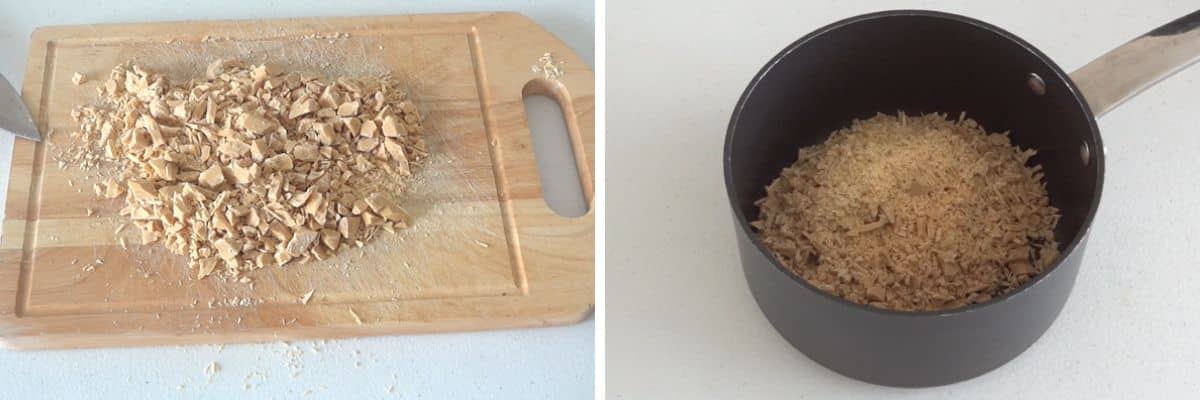
- In a medium saucepan, combine the chopped caramel chocolate, cream, sugar, and vanilla extract.
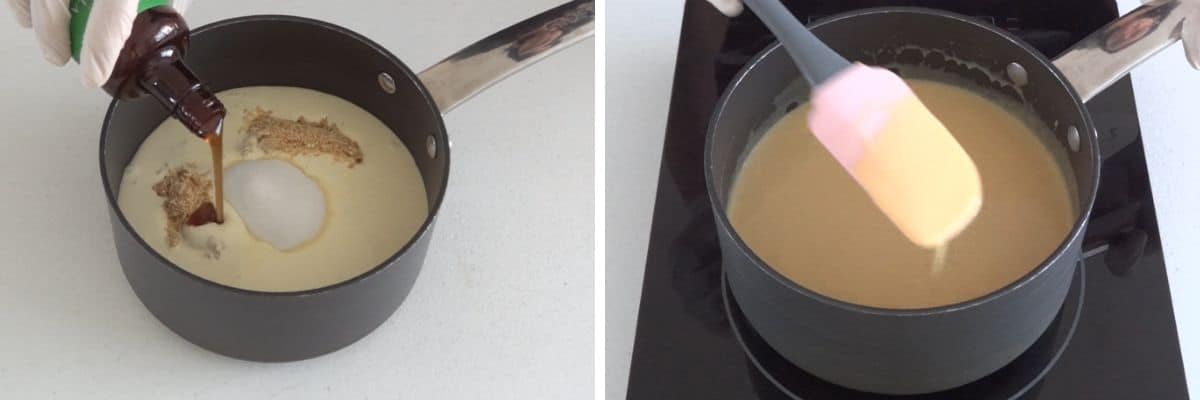
- Heat the mixture over low to medium heat, stirring continuously. This process is important for melting the chocolate and dissolving the sugar completely, ensuring a smooth and homogenous mixture.
Combine with Gelatine:
- Once the chocolate cream mixture is well combined and off the heat, mix in the prepared gelatine. Stir thoroughly to avoid any lumps. This step incorporates the gelatine into the mixture, which will help the panna cotta set properly.
Add Cold Milk and Strain:
- Add cold milk to the mixture and stir well. The cold milk helps cool down the mixture and contributes to a lighter texture.
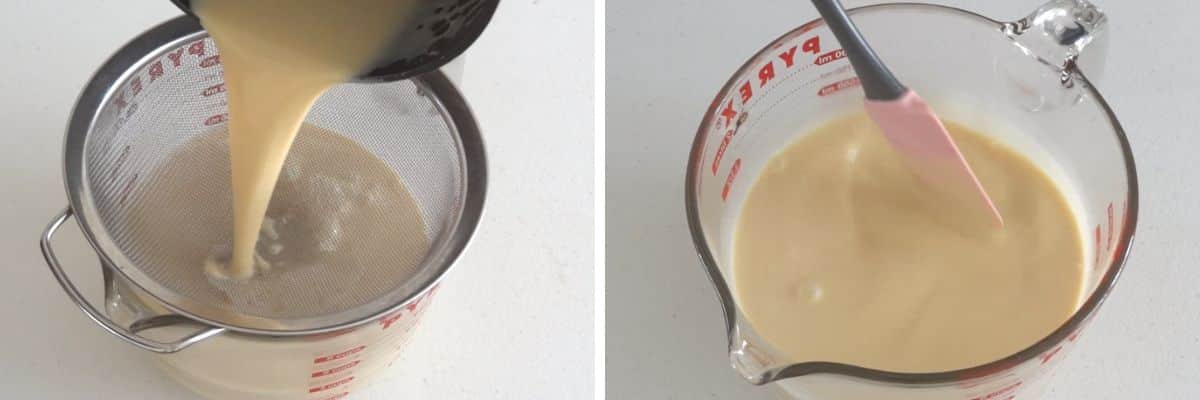
- Strain the mixture through a fine mesh strainer into a heatproof glass jug. This is to ensure the removal of any lumps or undissolved ingredients, resulting in a smooth panna cotta.
Pour into Pudding Jars and Cool:
- Let the mixture sit for about 15 minutes, stirring occasionally. This helps prevent the formation of layers in the panna cotta.
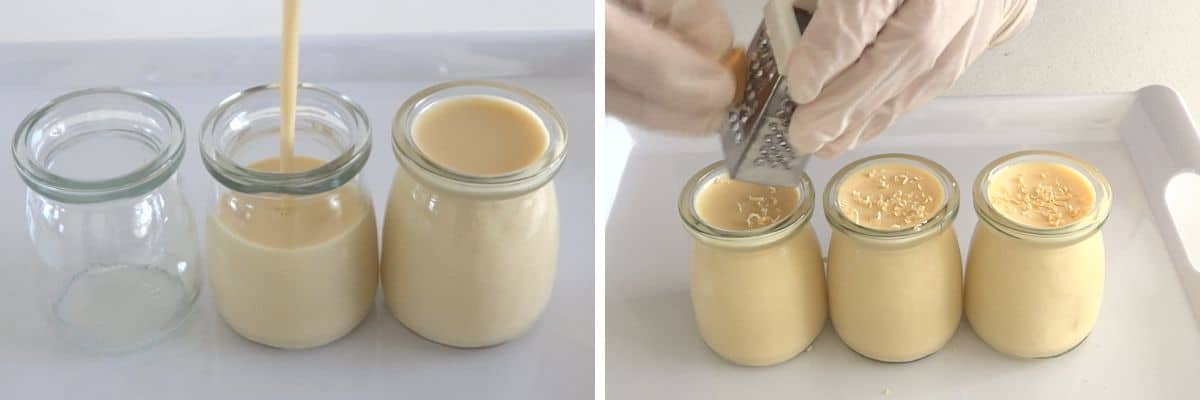
- Pour the mixture into individual pudding jars or glass dessert cups.
- Allow to cool to room temperature before refrigerating.
Refrigerate:
- Chill the panna cotta in the refrigerator overnight. This step is vital for the panna cotta to set correctly and develop its unique texture.
Garnish and Serve:
- Before serving, grate the reserved square of caramel chocolate over each panna cotta. This garnish adds a final touch of flavour and decoration.
My Top Tip
One of the most important tips about making Caramel Chocolate Panna Cotta is the significance of properly handling and incorporating the gelatine. Gelatine is the key ingredient that sets the texture of panna cotta, and its correct use is crucial for achieving the desired consistency and smoothness. Here are some specific points to emphasize:
Dissolve Gelatine Thoroughly: Ensure that the gelatine is completely dissolved in hot water without any lumps. Undissolved gelatine can lead to a grainy texture in the finished dessert.
Temperature Management: Add the gelatine mixture to the warm chocolate and cream mixture, not while it's too hot or too cool. If the mixture is too hot, it can weaken the setting ability of the gelatine. If it's too cool, the gelatine might start setting prematurely, leading to an uneven texture.
Even Distribution: Stir the gelatine into the chocolate and cream mixture thoroughly to ensure it is evenly distributed. This helps in achieving a uniformly smooth texture throughout the panna cotta.
Avoid Overheating: Never boil a mixture containing gelatine, as high heat can destroy its gelling properties.
Variations And Substitutions
Variations:
Flavour Twists:
- Coffee: Add a shot of espresso or a teaspoon of instant coffee to the cream mixture for a coffee-infused flavour.
- Spices: Add spices like cinnamon or cardamom for a warm, aromatic flavour.
Nutty Crunch:
- Add chopped toasted nuts like hazelnuts or almonds on top for added texture and flavour.
Substitutions:
Gelatine Alternatives:
- For a vegetarian version, use agar-agar, a plant-based gelatine substitute. The setting properties differ, so adjust the quantity as needed.
Dairy-Free Options:
- Replace the cream with coconut cream or a dairy-free cream alternative.
- Use almond milk or oat milk instead of regular milk.
Sugar Alternatives:
- Use honey, maple syrup, or a sugar substitute for a different sweetness profile or to cater to dietary restrictions.
Chocolate Varieties:
- Experiment with different types of chocolate, such as dark chocolate for a richer taste or white chocolate for a sweeter, milder flavour.
What Is The Difference Between Agar Agar And Gelatine
Agar-agar and gelatine are both gelling agents used in cooking to thicken and set liquids, but they have some key differences:
Texture:
- Gelatine: Provides a smooth, jelly-like texture that is soft and has a melt-in-the-mouth quality. It's wobbly and more delicate.
- Agar-Agar: Tends to create a firmer, more brittle gel compared to gelatine. Its texture is slightly chewier and less creamy.
Setting Properties
- Gelatine: Sets at a lower temperature and melts at around body temperature, which is why it feels smooth in the mouth.
- Agar-Agar: Sets at room temperature and doesn't melt until it reaches a higher temperature. This makes dishes set with agar-agar stable at warmer temperatures.
Usage Ratios
- Gelatine: The amount of gelatine used can vary depending on the desired firmness, but it generally requires more gelatine than agar-agar.
- Agar-Agar: It is more potent than gelatine, so less is needed to achieve the same amount of gelling. The ratio typically is around 1 teaspoon of agar powder to gel the same amount of liquid as 2 teaspoons of gelatine.
How To Activate Agar Agar
Agar-agar, unlike gelatine, needs to be activated through heat. Here's how to properly activate agar-agar for use in recipes:
- Measure Correctly: Start by measuring the agar-agar. It usually comes in powder, flakes, or bar form. The powder form is more concentrated and requires less quantity compared to flakes or bars. For most recipes, a general guideline is that one teaspoon of agar powder can gelatinize one cup of liquid.
- Mix with Liquid: Before heating, mix the agar-agar with the liquid called for in the recipe. This can be water, juice, milk, or any other liquid depending on what you're making. Ensure that the agar-agar is evenly dispersed in the liquid.
- Boil the Mixture: Bring the mixture to a boil. Agar needs to reach a boiling temperature to fully dissolve and activate its gelling properties. Once it boils, it's crucial to keep stirring to ensure that the agar dissolves completely.
- Simmer for a Few Minutes: After it has reached a boil, reduce the heat and let it simmer for a couple of minutes. This process ensures that the agar is completely activated. If you're using agar flakes or bars, they might require a slightly longer simmering time to fully dissolve compared to the powder.
- Cool to Set: Once the agar is fully dissolved, incorporate it into your dish as per the recipe. Agar-agar sets at room temperature, unlike gelatine which requires refrigeration. As it cools, it will start to set. This setting process happens quite quickly compared to gelatine.
- Refrigeration: While agar sets at room temperature, refrigerating can speed up the process and ensure a firmer set, especially for desserts like panna cotta.
- It's important to note that once set, agar-agar creates a firmer and slightly less creamy texture than gelatine. Also, if you're using it as a substitute for gelatine in a recipe, be aware that the proportions might differ due to agar's stronger setting ability.
More Panna Cotta Recipes
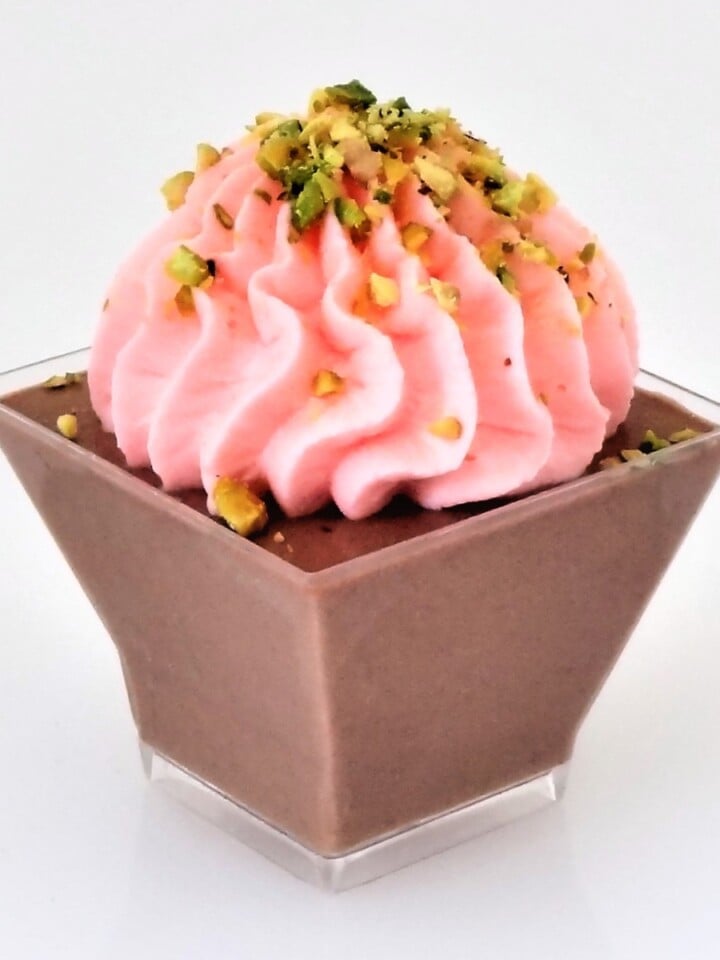
- Turkish Delight Panna Cotta
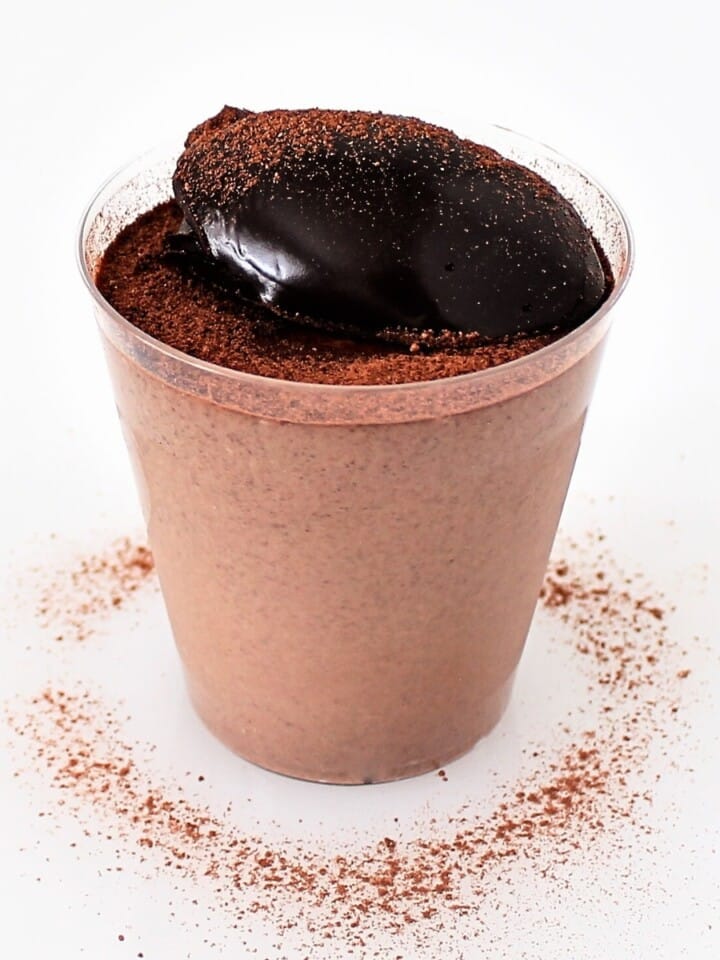
- Mocha Panna Cotta
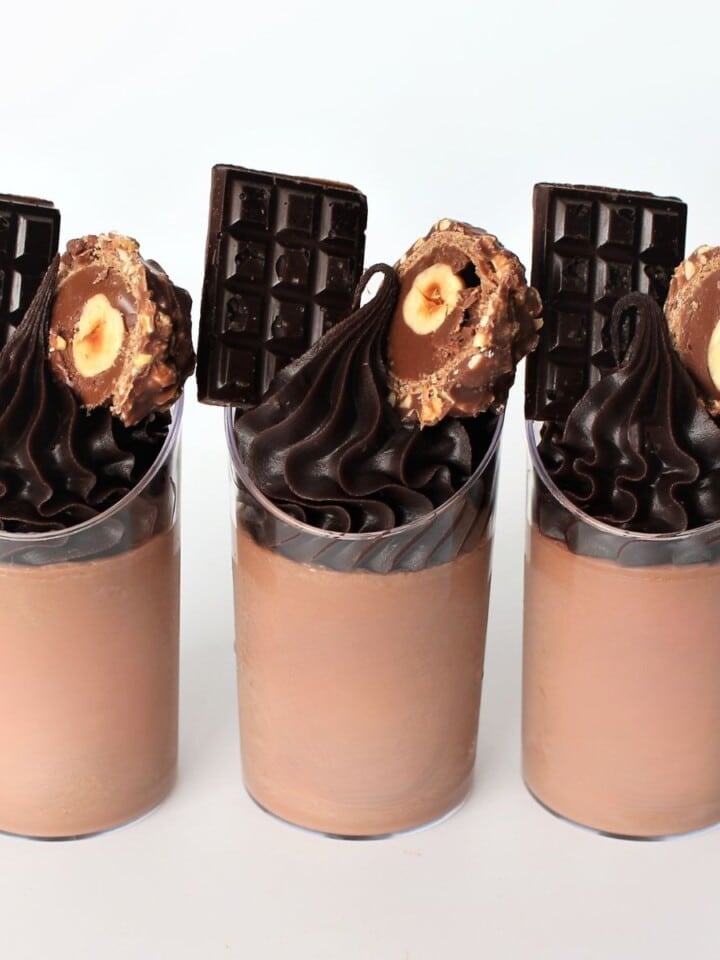
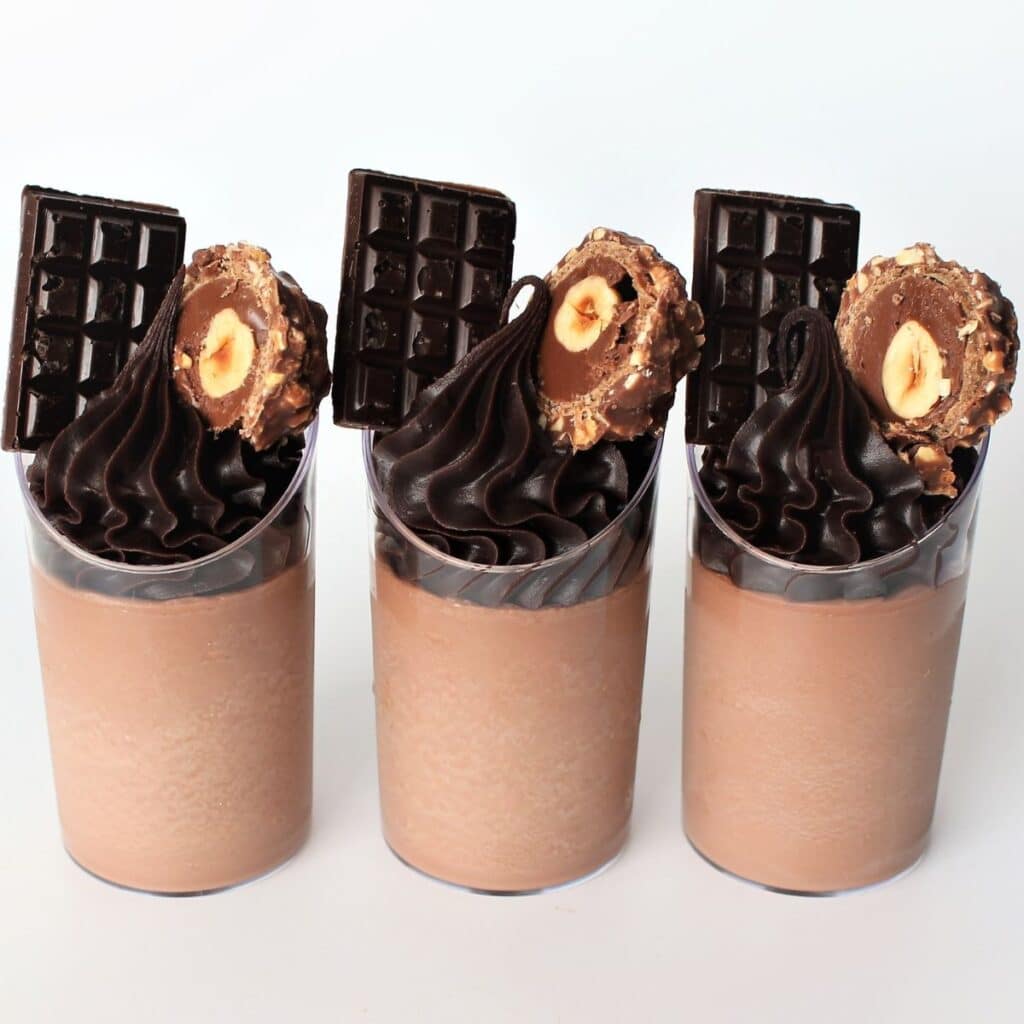
- Nutella Panna Cotta
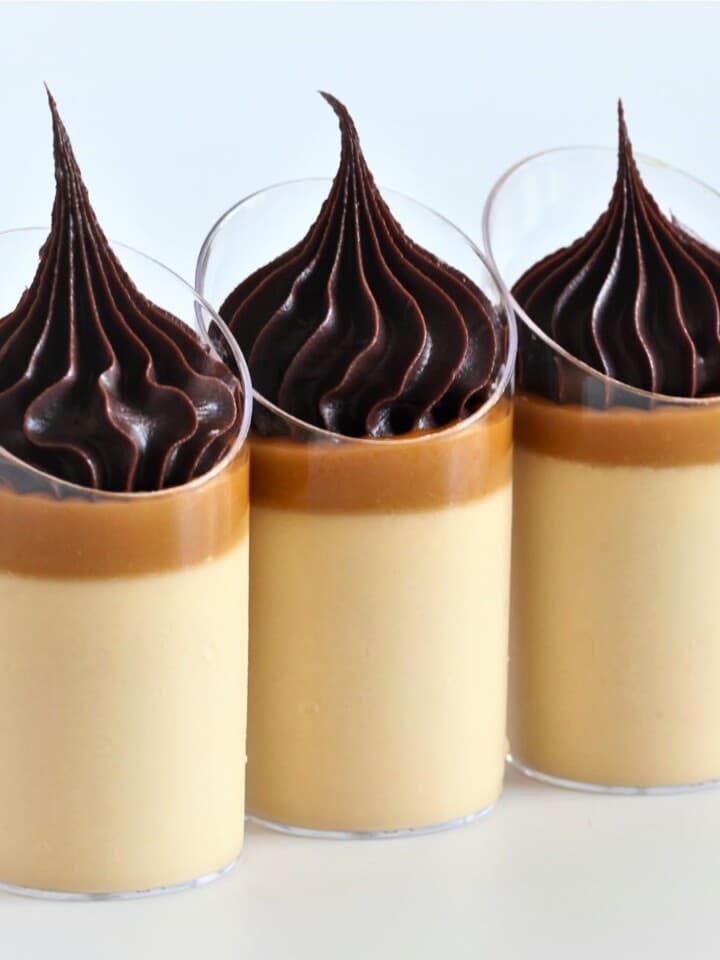
- Caramel Panna Cotta Chocolate Truffle
Common Questions
Yes, you can make dairy-free Caramel Chocolate Panna Cotta by substituting the cream with coconut cream or a dairy-free cream alternative, and replacing the milk with almond milk, soy milk, or oat milk. Just keep in mind that the flavour profile will change slightly with these substitutions.
It typically takes at least 4-6 hours for the panna cotta to set properly, but it's best to let it chill overnight. This ensures that it has completely set and developed the right texture.
If you don't have individual serving jars or cups, you can pour the panna cotta mixture into a single large dish. When serving, you can scoop it out or cut it into portions. A loaf pan or a round cake tin works well for this.
Yes, you can substitute caramel chocolate with regular chocolate. Depending on your preference, you can use milk, dark, or white chocolate. Just be aware that each type of chocolate will alter the flavour of the final dessert.
Yes, you can make panna cotta without gelatine by using agar-agar, a vegetarian gelatine substitute. Remember that agar-agar has a different setting property, so you might need to adjust the quantity and method (agar-agar needs to be boiled to activate). I provide more detail on this in the post.
You shouldn't freeze Panna Cotta as it can affect the texture, making it too firm and potentially icy. The best way to set panna cotta is to let it cool at room temperature and then refrigerate.
Caramel Chocolate Panna Cotta
INGREDIENTS
- 2 tablespoon water hot
- 2 teaspoon gelatine powder
- 180 g (6 ⅓ oz) caramel chocolate
- 400 ml (1 ⅔ cups) heavy cream
- ¼ cup sugar
- 2 teaspoon vanilla extract
- 400 ml (1 ⅔ cups) whole milk cold
EQUIPMENT
INSTRUCTIONS
- In a small bowl, add 2 teaspoons of gelatine to 2 tablespoons of hot water.
- Stir briskly until the gelatine is completely dissolved. This may take a minute or two.
- Keep the gelatine mixture in a warm water bath to ensure it remains liquid until you need to use it.
- Take a medium saucepan and add caramel chocolate (but remember to save one square for garnishing later).
- Add heavy cream, sugar and vanilla to the saucepan.
- Place the saucepan over a low to medium flame. Stir the mixture continuously to avoid burning the chocolate.
- Keep stirring until the chocolate is completely melted, the sugar is fully dissolved, and the mixture is smooth and well combined.
- Once the chocolate cream mixture is off the flame and no longer cooking, stir in the prepared gelatine mixture.
- Ensure that the gelatine is thoroughly mixed into the cream mixture to avoid lumps.
- Now, gently stir in the cold milk into the mixture.
- Strain the entire mixture through a fine mesh strainer. This step is crucial to remove any lumps and ensure a silky-smooth texture.
- Let the strained mixture sit for about 15 minutes at room temperature, stirring occasionally. This step is important to ensure that the panna cotta mixture doesn't separate into layers once poured into serving dishes.
- Carefully pour the mixture into your chosen pudding jars or glass dessert cups.
- Allow the filled jars or cups to reach room temperature.
- Then, place them in the refrigerator. Chill overnight to allow the panna cotta to set properly and develop flavours.
- Before serving, take the reserved square of caramel chocolate and use a mini grater or zester to grate it finely over the panna cotta.
- Serve the panna cotta cold for the best taste and texture.
NOTES
NUTRITION
Video Tutorials You Might Like


ParvinAkhter says
Five star
Fay says
Thank you!
Cindy Brown says
So, so delicious and nice and quick and easy!
There is an error in the listed ingredient amount for the gelatine though - it has 2 tablespoons instead of teaspoons.
Fay says
Oh my gosh! Thanks so much for letting me know Cindy! I'm thrilled you like it.