
This lemon curd recipe uses four ingredients (sugar, eggs, lemon juice, and butter) and comes together on the stovetop in about 15 minutes. There's no double boiler and no candy thermometer required. The eggs go in whole, so you won't end up with a bowl of leftover whites to find a use for.
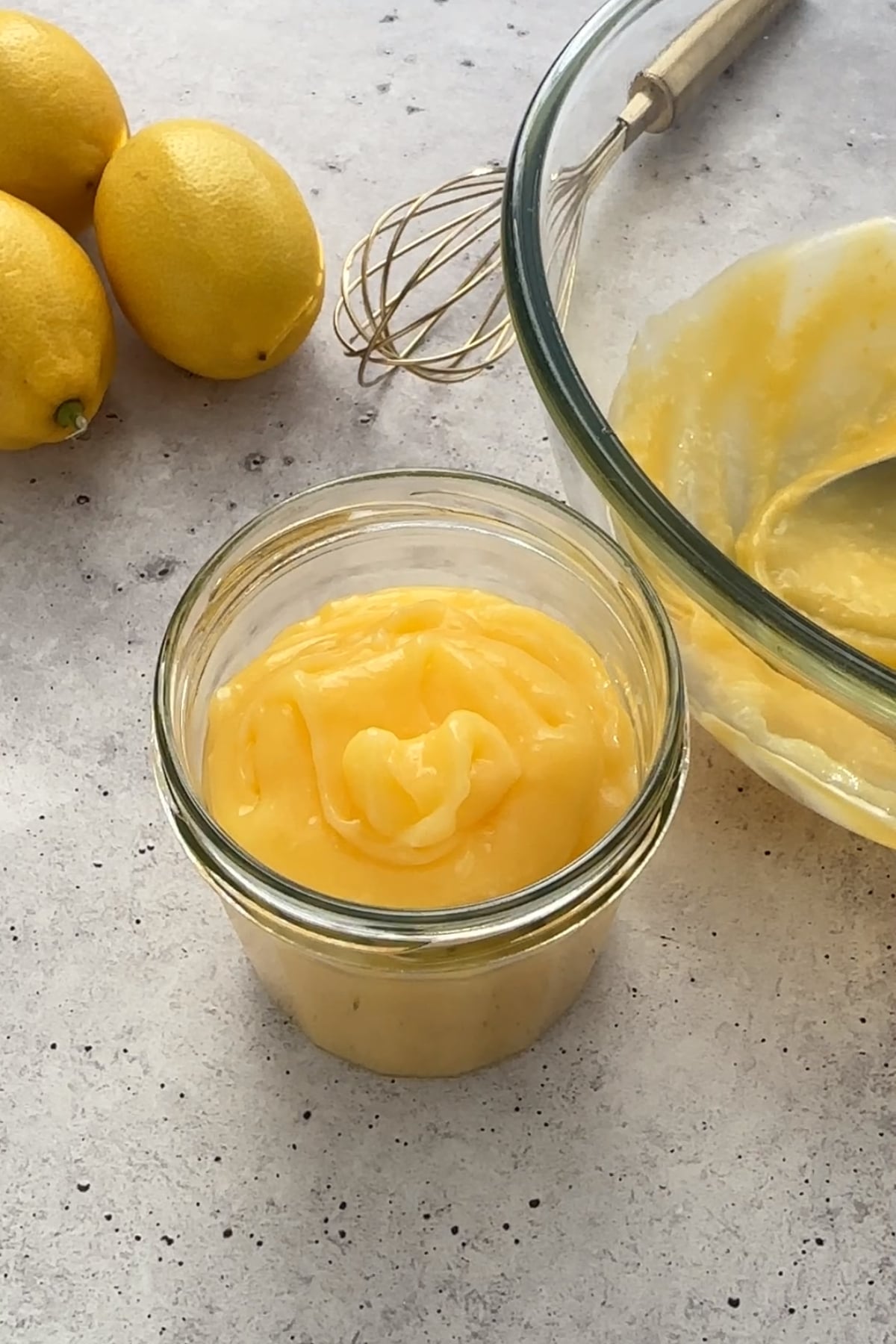
SUMMARISE AND SAVE THIS RECIPE
Why This Lemon Curd Recipe Works
This recipe skips the double boiler that most lemon curd recipes call for. You cook everything in one saucepan over direct medium heat, and as long as you keep stirring, the eggs cook slowly enough that they never scramble. It also uses whole eggs rather than just yolks, so nothing goes to waste and you get a fuller, rounder flavor than a yolk-only curd. With only four ingredients and one pot to wash, this is the version I make when I want real lemon curd without turning it into a production.
What Is Lemon Curd?
Lemon curd is a thick, spoonable citrus custard made by cooking lemon juice, sugar, eggs, and butter together until the eggs thicken the mixture. It's tangier and richer than lemon jam or lemon marmalade, which are made mostly from fruit and pectin. Curd is meant to be eaten as a spread, a filling, or a topping rather than canned for long-term pantry storage, since the eggs and butter mean it needs to stay refrigerated.
Ingredients for Lemon Curd
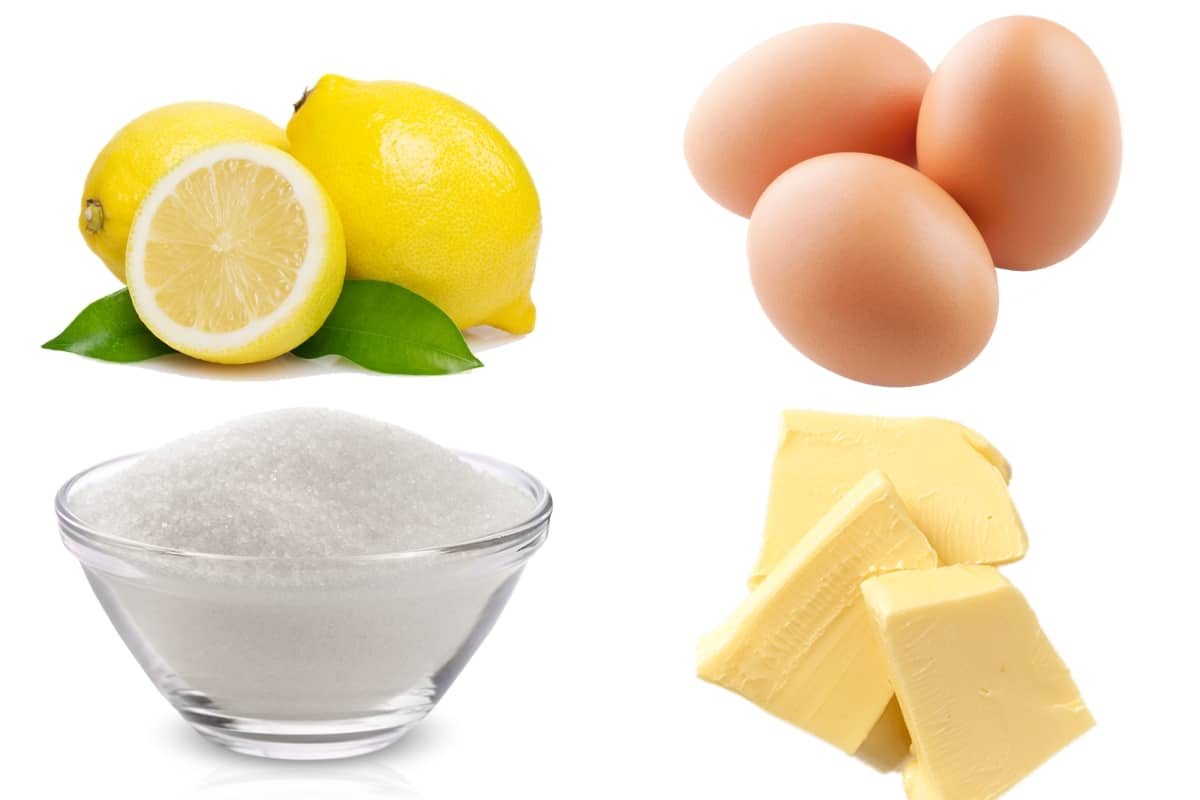
- Sugar: softens the tartness of the lemon juice and helps the curd set to a spreadable, not runny, consistency.
- Eggs: the backbone of the recipe. As they cook, the proteins thicken the mixture into a custard. Using whole eggs (not just yolks) means there's no need to plan a second recipe around leftover whites.
- Lemon juice: use fresh-squeezed for the best flavor. Bottled juice works in a pinch, but it tastes flatter and can leave the curd a little duller (more on that below).
- Unsalted butter: adds richness and a smooth, glossy finish. Unsalted lets you control the balance of sweet and tart without any extra saltiness creeping in.
How to Make Lemon Curd
1. Combine Ingredients Off Heat In a medium saucepan, off the heat, add the sugar, lemon juice, and eggs. Stir well to combine. Doing this off the heat first is what keeps the eggs from cooking prematurely before everything else is blended in.

2. Add Butter and Heat Add the butter to the saucepan, then move the pan to medium heat.

3. Stir Continuously Stir the mixture continuously over the heat. Keep going until you see bubbles forming and the curd starts to thicken, which usually takes a few minutes. You'll know it's ready when it coats the back of a spoon and holds a line if you draw a finger through it.

4. Strain for Smoothness Take the saucepan off the heat and strain the mixture through a fine mesh strainer into a bowl. This step removes any small pieces of cooked egg and is what gives the curd a smooth, custard-like finish.

5. Optional Blending For an extra-smooth consistency, blend the strained mixture with a stick blender. This step isn't required, but it can help if you want a completely uniform texture.

Cool and Refrigerate Cover the surface of the curd with cling wrap, pressing the wrap directly onto the curd so it doesn't form a skin. Refrigerate until fully cooled.

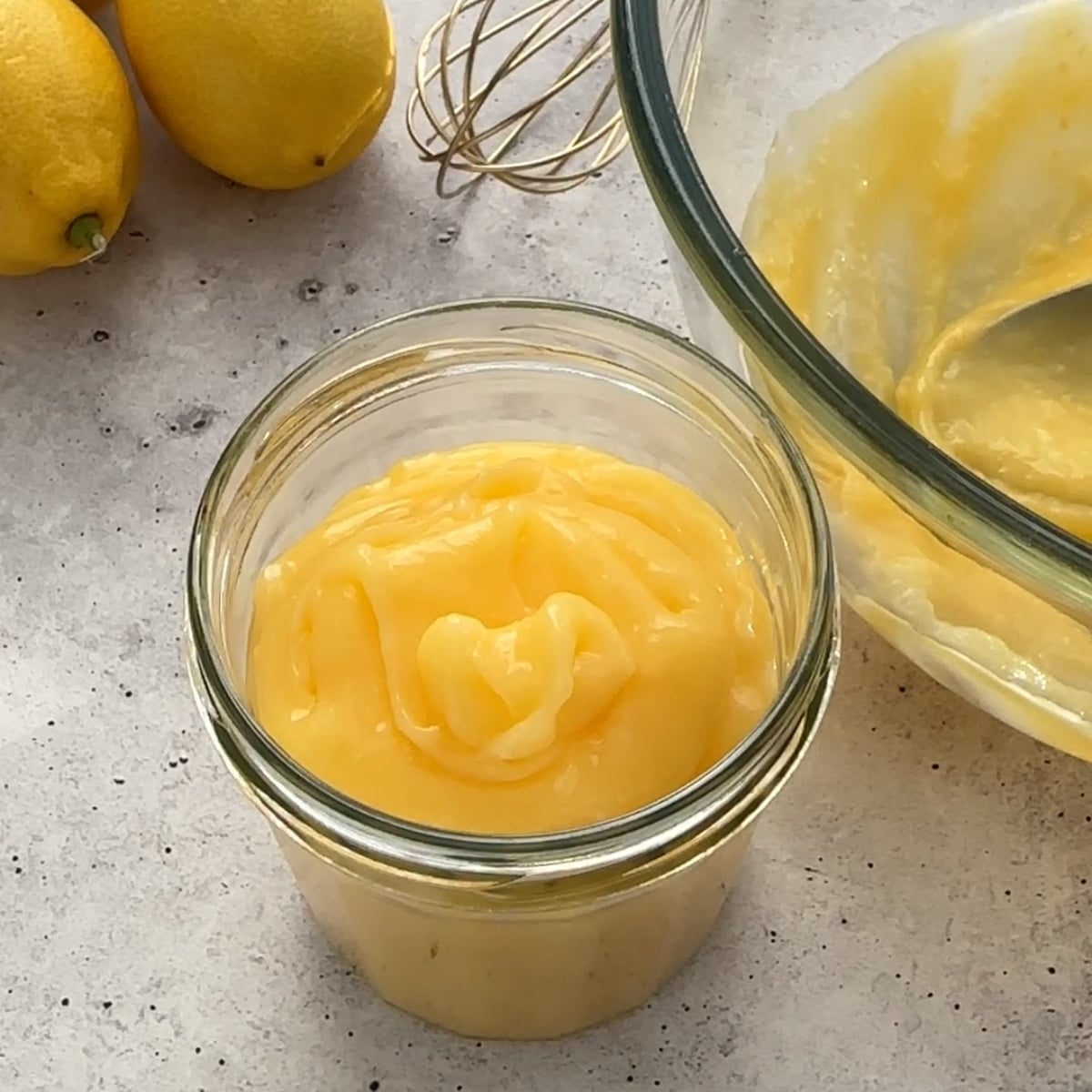
7. Final Stir and Store Before transferring the curd to a jar, give it a good stir with a silicone spatula to even out the texture. Store it in the refrigerator.

Shelf life: lemon curd keeps for one week in the refrigerator.
My Top Tip
Keep stirring the mixture the entire time it's on the heat. This one habit does three things at once: it stops the eggs from cooking unevenly and scrambling, it distributes heat through the mixture so the curd thickens at the same rate throughout, and it's what gives you that smooth, custard-like texture lemon curd is known for. If you take your eyes (and your whisk) off it for more than a few seconds, that's usually where things go wrong.
Troubleshooting Common Lemon Curd Problems
My lemon curd isn't thickening. It probably just needs more time over the heat. The mixture won't visibly change much at first, then it thickens fairly quickly once it gets close to temperature. Keep stirring over medium heat until it coats the back of a spoon. If you pull it off too early, it'll stay thin even after refrigerating.
My curd looks curdled or scrambled. This means the eggs cooked too fast, usually from heat that's too high or a stretch without stirring. Straining the mixture (step 4) will rescue most curds by removing the small cooked bits, and an optional blend with a stick blender smooths it out further. For next time, drop the heat slightly and don't stop stirring.
My curd tastes too tart or too sour. Taste it once it's cooled, since flavors mellow a little as curd chills. If it's still too sharp for you, stir in an extra tablespoon of sugar while it's warm and off the heat, then taste again before it fully cools.
My curd turned out grainy. This is almost always undissolved sugar or bits of cooked egg. Straining fixes it every time, so don't skip that step even if the curd looks smooth going in.
What to Do With Lemon Curd
Lemon curd is one of those things that's more versatile than people expect. A few ways to use it:
- Breakfast: spread it over warm toast, scones, or English muffins.
- Desserts: swirl it into yogurt or whipped cream, dollop it onto cheesecake or pavlova, or use it as a filling for tart cases or cupcakes.
- Baking: stir a spoonful into vanilla buttercream for an easy citrus Lemon Curd Buttercream.
- Pairings: serve it alongside fresh berries, or spoon it over cheesecake like my Raspberry and White Chocolate Cheesecake.
How Long Does Lemon Curd Last?
Homemade lemon curd keeps for one week in the refrigerator in an airtight container. It is not shelf-stable like jam, since it contains eggs and butter, so it needs to stay refrigerated even before opening. To freeze it, spoon the cooled curd into a freezer-safe container or bag, leaving a little room for expansion, and freeze for up to 2 months. Thaw it in the refrigerator overnight and give it a good stir before using, since it can separate slightly after freezing.
Common Questions
It works as a spread, a cake or tart filling, a topping for yogurt, cheesecake, or pavlova, or mixed into buttercream for a citrus frosting.
About one week in the refrigerator, or up to 2 months in the freezer.
No. Jam is made mostly from fruit and pectin and is shelf-stable once canned properly. Curd is made with eggs and butter, which means it's richer and creamier, but it has to stay refrigerated.
Yes, but fresh-squeezed juice gives a brighter flavor. Bottled juice works fine if that's what you have on hand.
Yes. Freeze it in an airtight, freezer-safe container for up to 2 months and thaw it in the fridge before using.
Eggs are what thicken lemon curd, so a true egg-free version needs a different thickener, like cornstarch, and the texture and flavor will turn out closer to a lemon pudding than a traditional curd.
Yes, this recipe doubles well. Use a slightly larger saucepan so the mixture has room to bubble, and expect a couple of extra minutes of stirring time to reach the same thickened consistency.
If you whip up one of my desserts, I'd love to see it! 😍 Tag me on Instagram or Facebook so I can check out your creation. I'll be reposting my favorites and giving shout-outs in my stories! 🎉
🎥 You can also find full dessert video tutorials on my YouTube channel. I post new dessert recipes there all the time, so come join me in the kitchen on YouTube!
It's always fun to see your unique twists on my recipes, so don't be shy, snap a pic and share it! 📢🍰 #CupcakeSavvysKitchen
4-Ingredient Lemon Curd Recipe
INGREDIENTS
- ½ cup (½ cup) sugar
- 3 (3) eggs large
- ½ cup (½ cup) lemon juice
- 120 g (½ cup) butter unsalted


INSTRUCTIONS
- Combine Ingredients Off Heat: In a medium saucepan, off the heat, add the sugar, lemon juice, and eggs. Stir well to combine.
- Add Butter and Heat: Add the butter to the saucepan, then place the pan over medium heat.
- Stir Continuously: Stir the mixture continuously over the heat until bubbles form and it thickens, a few minutes.
- Strain for Smoothness: Take the pan off the heat and strain through a fine mesh strainer into a bowl.
- Optional Blending: Blend with a stick blender for an extra-smooth consistency, if desired.
- Cool and Refrigerate: Cover the surface with cling wrap, pressing it onto the curd, and refrigerate until cooled.
- Final Stir and Store: Stir with a silicone spatula, transfer to a jar, and store in the refrigerator.
- Shelf Life: The lemon curd will last for one week in the refrigerator.
NOTES
- Whole Eggs for Zero Waste: this recipe uses whole eggs so there's no leftover whites to use up.
- Continuous Stirring: constant stirring is key to preventing the eggs from scrambling.
- Temperature Control: keep the heat at medium; if it heats too quickly, lower it.
- Straining Is Key: don't skip it, it's what gives the curd its smooth finish.
- Use Fresh Juice: fresh lemon or lime juice gives the best flavor.
- Storage: store in a clean, airtight jar in the refrigerator for up to 1 week.

Shelley O’Connell says
How long does lemon curd keep?
Fay says
Hi Shelly, One week in the refrigerator stored in an airtight container.
Muath says
Good
Sally McCoy says
This looks delicious. Lemon is my favorite flavor
Angela Aunchman says
Will this taste eggie. When ever I make lemon curd or pudding I can taste the egg. I do cook it on medium heat while continuing to stir and I always strain it. Is there a way to prevent it?
Fay says
Use the freshest eggs you can find and the end result will be delicious!