Blog Post QR Code 
DIY Dulce de leche
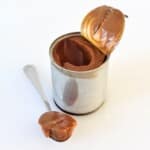
Dulce de Leche has a thick and velvety texture that's smooth and spreadable. The taste is rich and indulgent, featuring a deep caramel flavor with subtle notes of creamy, cooked milk. It's perfect for adding a luxurious touch to desserts, spreading on toast, or enjoying straight from the spoon.
Servings 4 Cans
Calories 1271kcal
EQUIPMENT
- Large Pot
INGREDIENTS
- 4 cans (4 cans) sweetened condensed milk not use sugar free
- (135.3 floz) water enough to cover cand by 2"/5cm
INSTRUCTIONS
- Remove the labels from all four cans of sweetened condensed milk. This step prevents any paper residue from sticking to the pot during cooking.
- Place the cans in a large pot, ensuring they do not touch each other.
- Pour enough water into the pot to cover the cans by at least 2 inches (5 cm). This ensures even heat distribution during cooking.
- Set the pot over medium-high heat and bring the water to a simmer. Once it starts simmering, reduce the heat to very low. The water should maintain a gentle simmer, not a vigorous boil.
- Cover the pot with a lid, checking occasionally to ensure the water level stays above the cans. Add more water if necessary to keep them fully submerged.
- Allow the cans to simmer on low heat for about 3.5 hours. This duration will produce a thick, rich Dulce de Leche with a deep caramel flavor. For a lighter consistency, reduce the simmering time to 2 to 2.5 hours.
- After the simmering time is up, turn off the heat and let the cans cool completely in the water. CAUTION: Do not remove the cans until they are fully cooled, as this ensures safety and prevents any risk of burns or splattering.
- Once the cans are completely cool, carefully remove them from the water. The Dulce de Leche can be stored in the unopened cans or transferred to airtight containers.
- These are shelf-stable and can be stored at room temperature. For the best quality, be guided by the use-by date on the cans.
NOTES
- Always keep the cans fully submerged in water to prevent overheating and potential can rupture.
- Handle the cans with caution after cooking, as they can retain heat even after cooling.
NUTRITION
Calories: 1271kcal | Carbohydrates: 215g | Protein: 31g | Fat: 34g | Saturated Fat: 22g | Polyunsaturated Fat: 1g | Monounsaturated Fat: 10g | Cholesterol: 135mg | Sodium: 553mg | Potassium: 1469mg | Sugar: 215g | Vitamin A: 1057IU | Vitamin C: 10mg | Calcium: 1155mg | Iron: 1mg
